For most of my working life, I had absolutely no idea how CPF worked.
I knew money disappeared from my salary every month. I knew my employer contributed some too. I knew CPF had something to do with retirement. And I vaguely understood that someday, when I wanted to buy a house, I could use some of it.
That was basically the extent of my financial literacy when it came to CPF.
In my head, CPF was just:
Money that is locked away until I'm 55 — unless I need it to buy a house.
So I never really paid attention to it. I definitely didn't think of it as part of my investment portfolio.
Then one day, a colleague told me:
"Why don't you invest your CPF?"
My response was essentially:
You can do that?
I genuinely didn't know CPF investing was a thing
For anyone else who was as clueless as I was: yes.
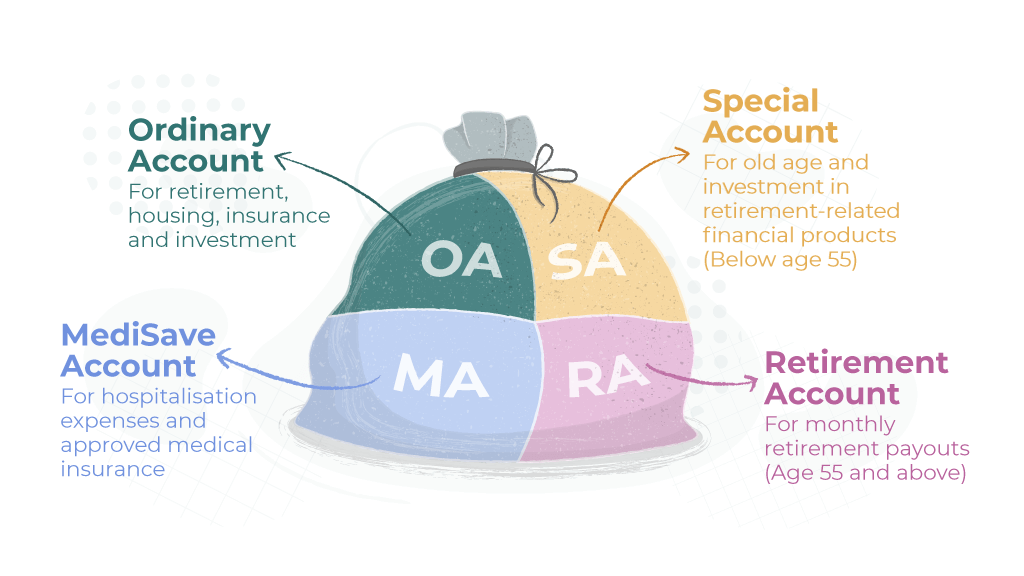
Under the CPF Investment Scheme, you can invest eligible savings in your Ordinary Account after setting aside the first S$20,000 in your OA.
At the time of writing, CPF OA savings earn a base interest rate of 2.5% per annum, with additional interest potentially applying to eligible CPF balances.
I didn't know any of this.
My colleague explained it to me very simply. Her perspective was: if I already had money sitting inside my CPF that I couldn't freely withdraw anyway, I could at least look at whether investing part of the eligible amount made sense for me.
Then she introduced me to her financial adviser.
And that was where I became skeptical. Very skeptical.
I did not have a good impression of financial advisers
I have had some pretty bad experiences with financial advisers throughout my life.
A lot of my interactions felt transactional. Someone would approach me because they wanted a meeting. The meeting existed because they wanted to sell something. And sometimes getting you into that meeting seemed to matter more than being transparent about why they wanted to meet you in the first place.
I once had a financial adviser promise me a sign-up gift just for attending a meeting. I showed up. Then suddenly the gift was "out of stock."
Experiences like that made me extremely guarded. So when my colleague offered to introduce me to her FA, my immediate reaction wasn't:
Amazing! Someone to help me with my finances!
It was closer to:
Okay... what is he going to try to sell me?
My colleague eventually convinced me with: "Just try looking at CPF investments first."
So I caved. And that's how I met Shaun.
I went into our first meeting assessing his vibe
Because Shaun was my colleague's friend, I was trying to be nice.
But internally? I was evaluating everything.
Was this eventually going to become a sales pitch? Would I suddenly be told I urgently needed three insurance policies? Would he start pressuring me to sign something?
I had my guard up.
But over several conversations, it slowly started coming down.
And strangely, it wasn't because Shaun was particularly good at convincing me to invest. It was because he wasn't trying very hard to convince me at all.
He listened. He asked about what I wanted my life to look like. He talked to me about finances in the context of everything else I was trying to build.
And over time, I started seeing that his interest wasn't simply:
How much money can Chloe put into this product?
It was:
What are you trying to do with your life, and how do your finances support that?
That difference mattered to me.
It's been more than a year now
I've known Shaun for over a year at this point.
And throughout that time, he has never pressured me into making a financial decision I didn't want to make. He hasn't tried to upsell me something simply because there was something else he could sell.
There have even been moments where we've discussed financial decisions and the conclusion was basically:
No, you don't need that right now.
Which, ironically, made me trust him significantly more.
And then there is another important test of someone's patience: me disappearing.
I am terrible at replying to messages during certain seasons of my life. There have absolutely been periods where Shaun has messaged me and I have vanished into the void. No dramatic follow-up. No pressure. He waits.
And when I eventually resurface because suddenly I have seventeen financial questions, he helps me work through them.
So eventually, I made the decision to invest part of my eligible CPF OA savings.
And this is what has happened so far

This is where I need to make something very clear.
I am not posting this screenshot to say:
"Look! Put your CPF into investments and you will definitely get these returns."
Investments do not work that way. There is risk involved, returns fluctuate, and CPF Board itself advises members to consider their risk tolerance, investment horizon and whether they can potentially earn more than the risk-free CPF interest they are giving up before investing through CPFIS.
Even Shaun has told me that the returns I've experienced so far may not continue at the same rate. Markets change. There will be better years. There will probably be worse ones.
What matters more to me is that I now understand there were options for my CPF money that I didn't even know existed.
Before this, I wasn't making a deliberate decision to leave my CPF OA untouched. I was leaving it untouched because I didn't know there was a decision to make.
That's a very different thing.
I'm starting to realise how much financial knowledge I simply never learned
This whole experience has made me wonder how many working adults are in the same position.
We receive CPF contributions every month. We accumulate thousands — eventually tens of thousands — of dollars inside these accounts. But how many of us actually understand what each account does? What interest we're earning? What we can invest? What we can use for housing? What happens at 55? What our CPF could eventually provide in retirement?
I certainly didn't.
For years, my financial strategy for CPF was basically:
Ignore it until Future Chloe needs a house.
Now I actually include it when I think about my assets and long-term financial position.
That feels like a surprisingly big shift.
So consider this my CPF PSA
If you're a working adult in Singapore and, like me, you've been watching CPF deductions appear on your payslip every month without really understanding what happens after that:
Maybe go look.
You don't necessarily have to invest it. In fact, investing your CPF won't be appropriate for everyone. Leaving eligible money in your OA means continuing to receive CPF's risk-free interest, whereas investments can lose money and come with costs.
But you should at least know what your options are.
Find out how much you have. Understand what your OA is doing. Understand what CPFIS is. Understand the risks. Then decide deliberately what makes sense for you.
And if you're someone like me who has always been deeply suspicious of financial advisers but would like someone to explain this stuff without making you feel like you're sitting through a sales pitch — I can finally say that I have one I actually trust.
Tell him Chloe sent you.
And Shaun, if you're reading this: thank you for surviving the periods where I disappear for weeks and then suddenly come back with an entire financial crisis and twelve questions.
I appreciate you.
This is my personal experience and not financial advice. Investment returns are not guaranteed, and investing CPF savings involves risk. Please understand the CPF Investment Scheme and consider your own financial situation, investment horizon and risk tolerance before making a decision.